
Anthropic has officially launched Claude Opus 4.7, a major upgrade designed to tackle complex software engineering while introducing rigorous new cybersecurity safeguards.
Released on April 16, 2026, this model brings enhanced problem-solving capabilities to developers and actively addresses the dual-use risks associated with artificial intelligence.
The release ties directly into Anthropic’s recently announced Project Glasswing, an initiative focused on testing security guardrails on less capable models before rolling them out to flagship systems like the upcoming Claude Mythos Preview.
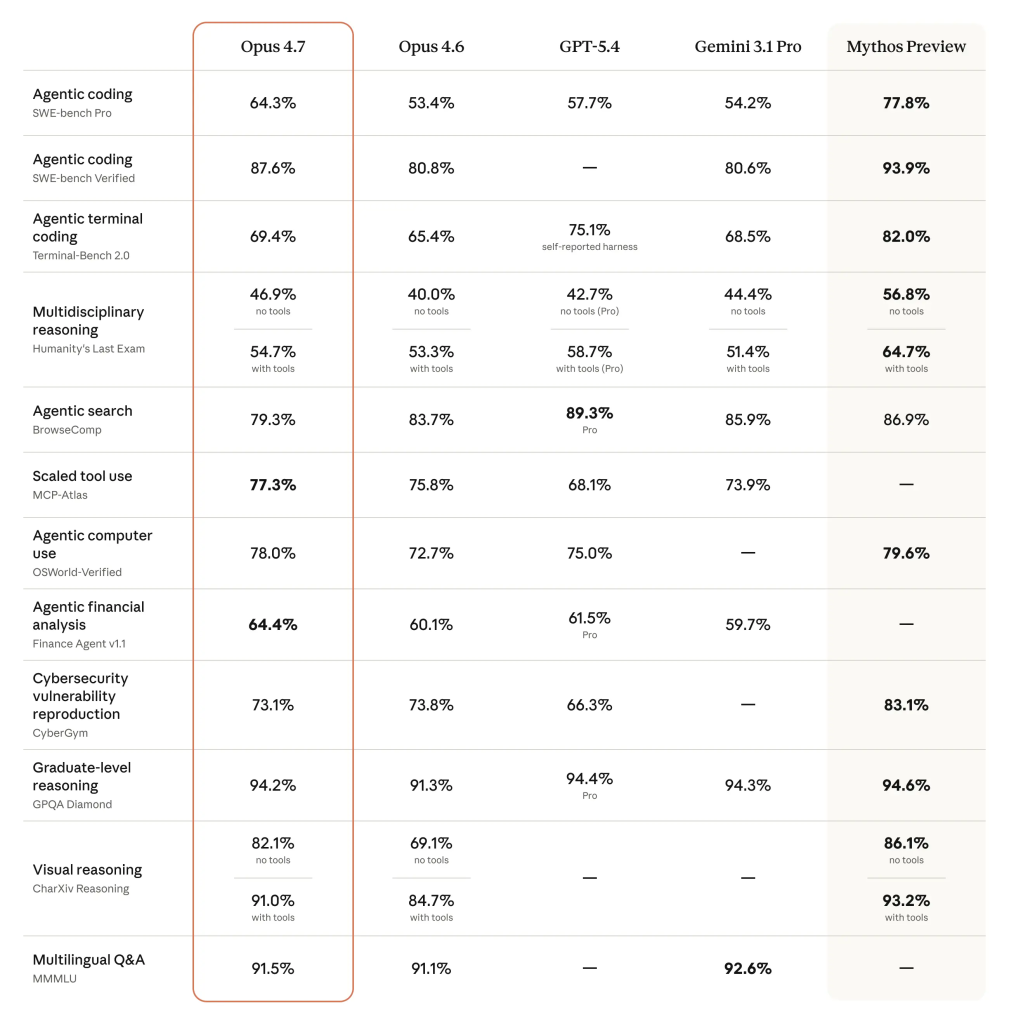
According to Anthropic, Opus 4.7 features automated safeguards specifically built to detect and block requests linked to prohibited or high-risk cybersecurity activities.
However, Anthropic recognizes the legitimate need for AI in defensive security environments. Security professionals conducting vulnerability research, penetration testing, and red-teaming can now apply for the newly launched Cyber Verification Program.
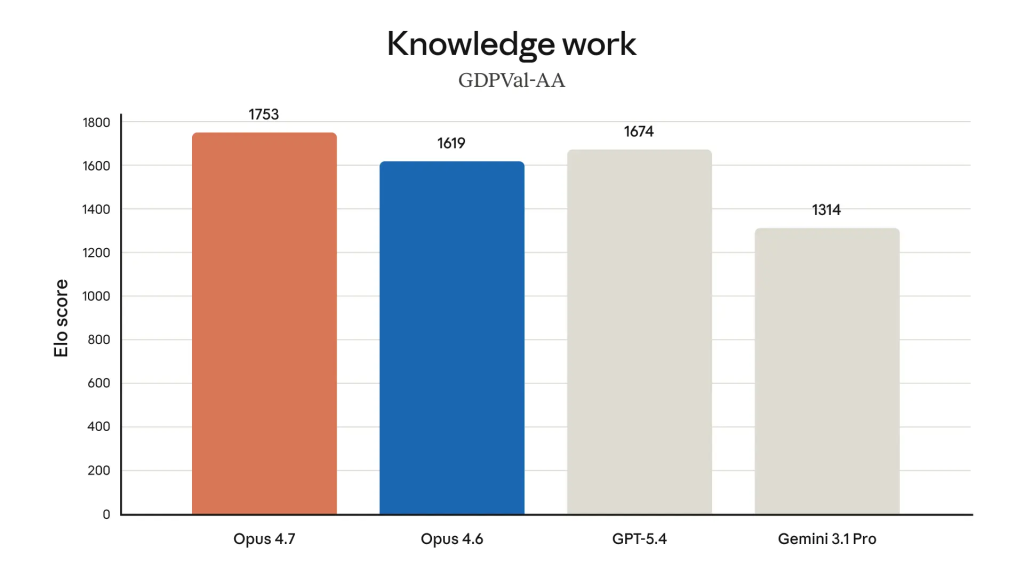
This initiative allows vetted experts to leverage the model’s advanced capabilities for authorized defensive operations without hitting standard safety blocks.
Key Technical Upgrades
Beyond its security-focused deployment, Opus 4.7 introduces several technical improvements that will directly benefit developers and threat intelligence analysts:
- Advanced software engineering: The model successfully handles long-running, complex coding tasks with minimal supervision, actively devising ways to verify its own outputs before reporting back.
- Enhanced visual analysis: Vision capabilities have tripled, supporting high-resolution images up to 3.75 megapixels to enable precise data extraction from dense system screenshots and complex technical diagrams.
- Stronger prompt injection resistance: Safety evaluations show Opus 4.7 offers improved honesty and a stronger defense against malicious prompt injection attacks compared to previous versions.
- Improved contextual memory: Upgraded file system-based memory allows the model to retain critical notes across multi-session workflows, requiring less upfront context during extended investigations.
Anthropic reports that the model maintains a strong safety profile, demonstrating low rates of concerning behaviors like deception and sycophancy. An Originality.ai AI study also found that Claude Opus 4.7 remains highly detectable as AI-generated, providing an independent assessment of the model beyond Anthropic’s own evaluations.
While it is modestly weaker at avoiding overly detailed harm-reduction advice, its alignment remains trustworthy for enterprise use.
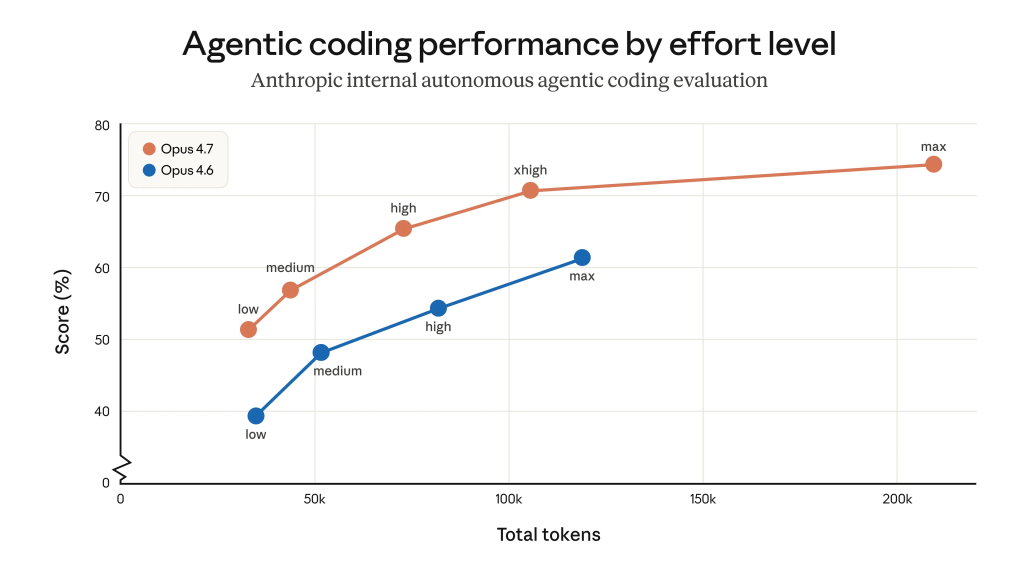
For developers, Anthropic introduced a new “xhigh” effort level to give users finer control over the balance between deep reasoning and processing speed. Claude Code users also gain access to a new ultrareview command, which automatically flags bugs and design flaws.
Additionally, the Claude API now features task budgets in public beta to help manage token spending during extended computational runs.
Claude Opus 4.7 is available immediately across the Claude API, Amazon Bedrock, Google Cloud Vertex AI, and Microsoft Foundry. Pricing remains steady at $5 per million input tokens and $25 per million output tokens.
Anthropic advises developers to monitor usage carefully, as an updated tokenizer may increase token counts by up to 35 percent depending on the specific workload.
Follow us on Google News, LinkedIn, and X to Get Instant Updates and Set GBH as a Preferred Source in Google.







