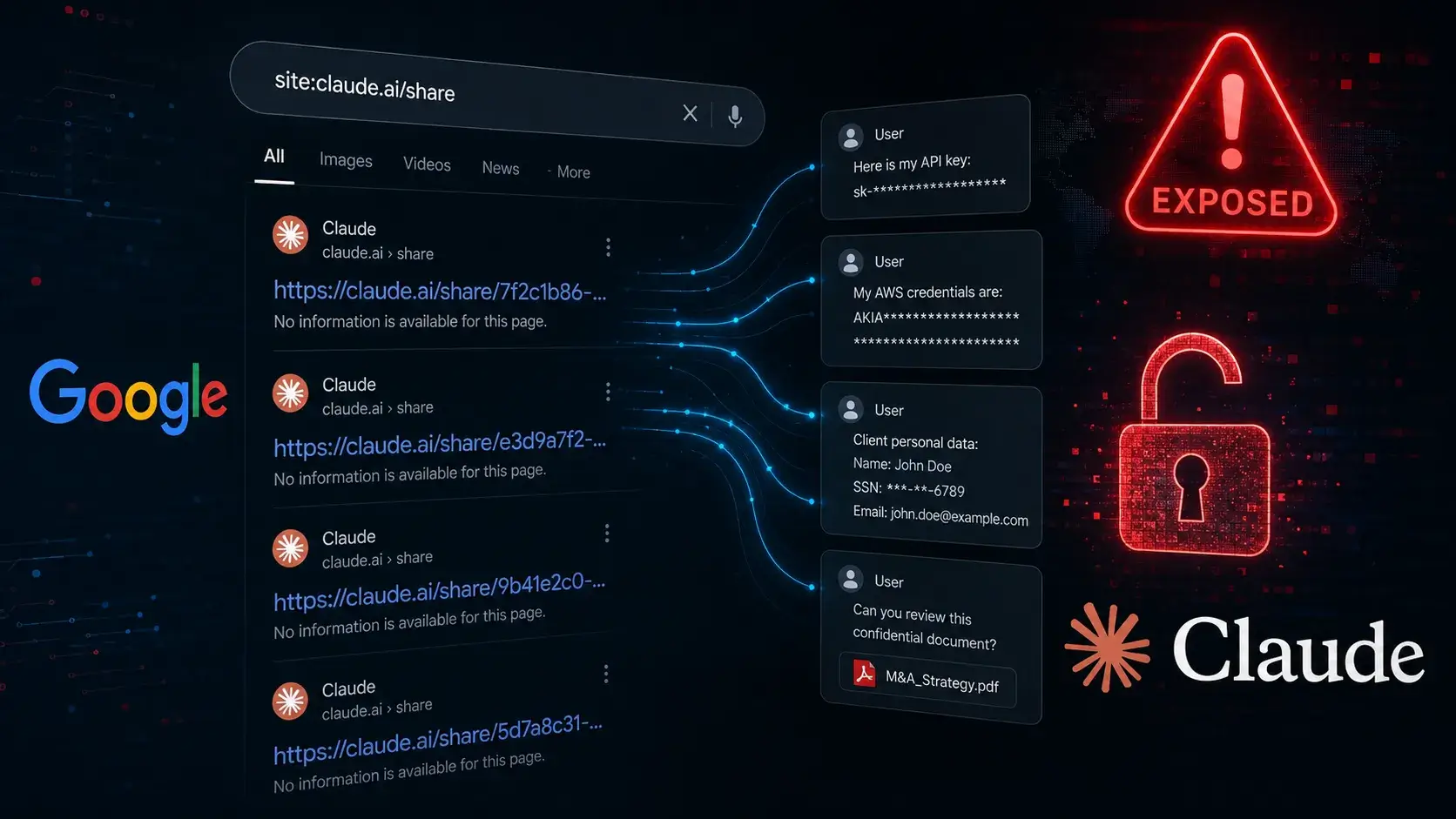

Anthropic’s Claude includes a share feature that creates a publicly accessible URL for conversations, allowing users to share AI chats with colleagues, clients, or friends.
However, this convenience also brings exposure risks when shared URLs are posted in public forums, on social media platforms, web pages, or other crawlable locations.
Claude AI Shared Chats Exposed
According to a Reddit thread that flagged the issue, Claude share pages appeared to lack effective noindex controls, which allow search engines to crawl and index the full contents of conversations.
Reports indicated that the indexed results included discussions on sensitive topics such as legal strategies, engineering troubleshooting, proprietary code, personal matters, and other private information.
While the share URL is intended for external access, many users might assume that a link remains obscure unless they share it intentionally. Search engine indexing undermines this security assumption, making a link that was known only to a small audience discoverable through standard web searches.
This incident is reminiscent of previous cases involving publicly shared ChatGPT conversations, where collaboration pages became indexed by search engines.
In both situations, the primary issue is not unauthorized account access but rather the unintended discoverability of content that was deliberately shared via public URLs.
Once indexed, these conversations can be accessed by researchers, competitors, threat actors, recruiters, or anyone looking for relevant information.
As of Sunday, Google search results for the affected Claude pages had largely disappeared, which may indicate that Anthropic made a backend change, requested deindexing, or modified how search engines handle shared chat pages.
At the time of reporting, Anthropic had not publicly clarified the cause, scope, or remediation measures related to this issue.
However, deindexing alone does not ensure that exposed data is no longer accessible. Previously shared URLs might remain active, and cached copies, archived pages, browser histories, bookmarks, screenshots, or reposted links could continue to expose sensitive material.
Effective remediation requires server-side revocation or deletion of unnecessary shared conversations rather than solely relying on removing search results.
Claude users should review their active shared chats and remove any links that are no longer necessary. Organizations should remind employees not to use public AI sharing features for confidential legal materials, source code, customer data, internal business plans, credentials, or regulated information.
Shared AI conversations should be treated as potentially public unless the platform explicitly enforces authentication, access expiration, and strong anti-indexing protections.
This incident underscores a broader AI security challenge: collaboration features can unintentionally become channels for data exposure when privacy designs do not align with actual user behavior.
Platforms must combine noindex directives with authentication controls, link expiration, access revocation, and clear user warnings to mitigate the risk of sensitive conversations appearing on the open web.
ALERT: 20+ government sites delivered malware to businesses and citizens. See full attack research to check your own exposure.


