

A new activity from Webworm, a China-aligned advanced persistent threat (APT) group, revealing a significant evolution in its cyber espionage toolkit during 2025.
The group, first publicly documented in 2022, has shifted its targeting from primarily Asian organizations to government entities across Europe, while adopting stealthier techniques and cloud-based command-and-control (C2) infrastructure.
One of the most notable developments is the introduction of a new backdoor dubbed GraphWorm, which leverages Microsoft OneDrive via the Microsoft Graph API for C2 communication.
This marks a growing trend among threat actors abusing legitimate cloud services to blend malicious traffic with normal enterprise activity, making detection significantly more difficult.
Webworm has historically been linked to other China-aligned threat groups such as SixLittleMonkeys and FishMonger. Earlier campaigns relied on well-known malware families like McRat and Trochilus.
ESET said in a report shared with GBhackers, malware group has gradually transitioned away from traditional remote access trojans toward lightweight backdoors and proxy-based tools that provide flexibility while reducing forensic visibility.
GraphWorm exemplifies this shift. Instead of communicating with attacker-controlled servers, the malware interacts exclusively with OneDrive cloud storage.
Upon infection, it generates a unique victim identifier using system attributes such as IP address, processor ID, and hardware serial number.
This identifier is used to create a dedicated directory within a OneDrive tenant, effectively isolating each compromised machine.
GraphWorm Malware Abuses Microsoft OneDrive
Within this directory, GraphWorm organizes its operations into subfolders for tasking, results, and file transfers. Commands issued by operators are stored in the “job” folder, while execution results are uploaded to a “result” directory.
The malware also supports large data exfiltration by abusing the Microsoft Graph API endpoint /createUploadSession/createUploadSession, enabling efficient transfer of staged files.
All communications are encrypted using AES-256-CBC and encoded with Base64 before transmission, adding another layer of obfuscation.
The backdoor also supports proxy configuration, allowing attackers to route traffic through intermediary systems and further evade network monitoring tools.
In parallel, Webworm deployed another backdoor called EchoCreep, which uses Discord as its C2 channel.
ESET researchers decrypted over 400 Discord messages, revealing operational insights including victim tracking, command execution, and file transfers. Each victim was assigned a dedicated Discord channel, indicating a structured and organized attack workflow.
Beyond backdoors, Webworm has expanded its use of custom proxy tools such as WormFrp, ChainWorm, SmuxProxy, and WormSocket.
These tools enable complex traffic routing across multiple compromised systems, effectively creating a hidden relay network. The infrastructure relies on cloud hosting providers like Vultr and IT7 Networks, further masking attacker activity.
The investigation also uncovered the abuse of a misconfigured Amazon S3 bucket used to store stolen data and tool configurations.
Files retrieved from the bucket included virtual machine snapshots, credential dumping utilities like SharpSecretsdump, and sensitive data from European government entities.
This indicates successful post-exploitation activity and potential lateral movement within targeted environments.
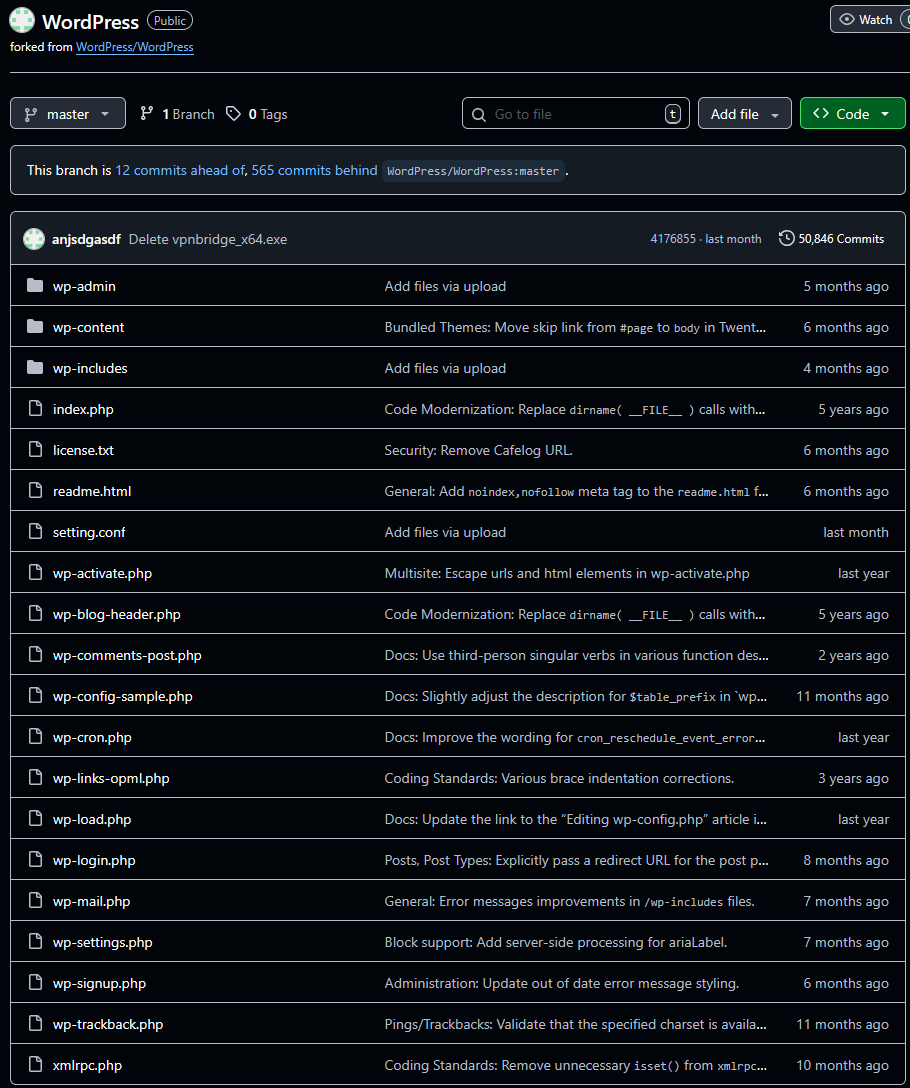
Additionally, Webworm continues to use GitHub repositories as malware staging platforms. By disguising malicious repositories as legitimate projects, such as a forked WordPress repository, the group ensures easy payload delivery while avoiding suspicion.
ESET’s analysis also suggests that Webworm relies on open-source tools like dirsearch and nuclei to identify vulnerabilities in target systems.
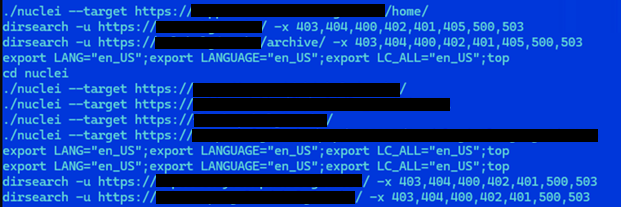
Evidence shows exploitation attempts against known flaws such as CVE-2017-7692 in SquirrelMail, potentially used for initial access in at least one observed case.
The 2025 campaign targeted organizations in Belgium, Italy, Poland, Serbia, and Spain, with additional activity observed in South Africa. This geographic expansion highlights the group’s shifting strategic priorities and continued operational maturity.
The adoption of platforms like OneDrive and Discord for C2 communication demonstrates how modern threat actors are increasingly leveraging trusted services to bypass traditional security controls.
As Webworm continues to refine its techniques, defenders face growing challenges in distinguishing legitimate cloud traffic from malicious activity.
IOCs
| SHA-1 | Filename | Detection | Description |
| CB4E50433336707381429707F59C3CBE8D497D98 | SearchApp.exe | WinGo/Agent.ZK | EchoCreep backdoor using Discord for C&C. |
| 1DF40A4A31B30B62EC33DC6FECC2C4408302ADC7 | ssh.exe | WinGo/HackTool.Proxy.AE | WormFrp proxy tool. |
| 7DCFE9EE25841DFD58D3D6871BF867FE32141DFB | svc.exe | MSIL/HackTool.Proxy.H | WormHole proxy tool. |
| 77F1970D620216C5FFF4E14A6CCC13FCCC267217 | C2OverOneDrive_v0316.exe | Win32/Agent.VWD | GraphWorm backdoor using the Microsoft Graph API for C&C. |
| 948159A7FC2E688386864BEA59FD40DFFC4B24D6 | MessengerClient.exe | MSIL/HackTool.Proxy.I | WormSocket proxy tool. |
| A3C077BDF8898E612CCD65BC82E7960834ADB2A9 | dsocks.exe | WinGo/Riskware.Iox.L | SmuxProxy, a custom iox with hardcoded IP. |
Note: IP addresses and domains are intentionally defanged (e.g., [.]) to prevent accidental resolution or hyperlinking. Re-fang only within controlled threat intelligence platforms such as MISP, VirusTotal, or your SIEM.
Follow us on Google News, LinkedIn, and X to Get Instant Updates and Set GBH as a Preferred Source in Google.


 group, revealing a significant evolution in its cyber espionage toolkit during 2025.)