

A targeted malware distribution campaign that abuses a counterfeit Indian Income Tax Department assessment notice to deliver a multi-stage Remote Access Trojan (RAT)-style payload.
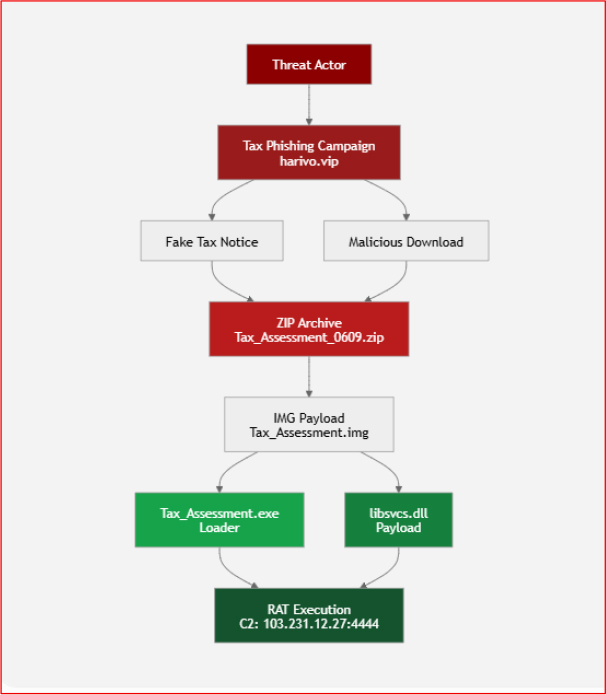
The threat actors hosted a fake tax-assessment portal on harivo[.]vip and used social-engineering lures official branding, tax terminology, legal references, penalties, and a “Download Assessment Order & Workings” prompt to persuade victims to retrieve a malicious ZIP archive named Tax_Assessment_0609.zip.
Inside the archive sits a disk image (Tax_Assessment.img) that contains a PE loader (Tax_Assessment.exe) and a DLL payload (libsvcs.dll), forming a staged infection chain designed for stealthy persistent access.
Technical analysis shows Tax_Assessment.exe is a loader that invokes libsvcs.dll via .NET reflection. The executable calls Assembly.LoadFrom() to load the DLL and then resolves client.DllEntry.Run() to transfer execution dynamically.
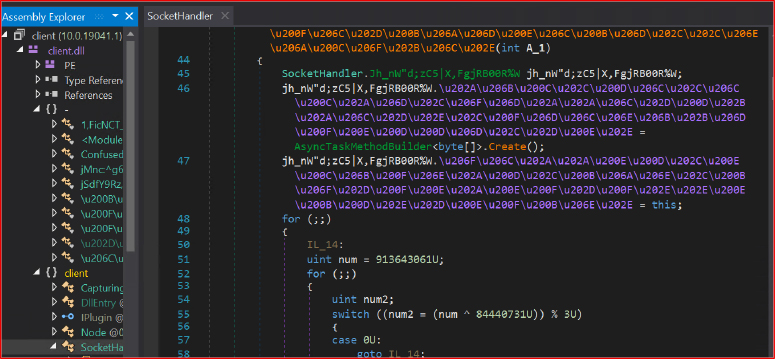
Both binaries are obfuscated with ConfuserEx, indicating a deliberate effort to complicate static analysis and evade detection.
Additional defense-evasion measures observed include console window hiding, registry modifications to establish persistence, spoofed assembly metadata that mimics legitimate Microsoft components, and manipulated file version fields (Product/File Version: 0.0.0) likely intended to mislead analysts and security products.
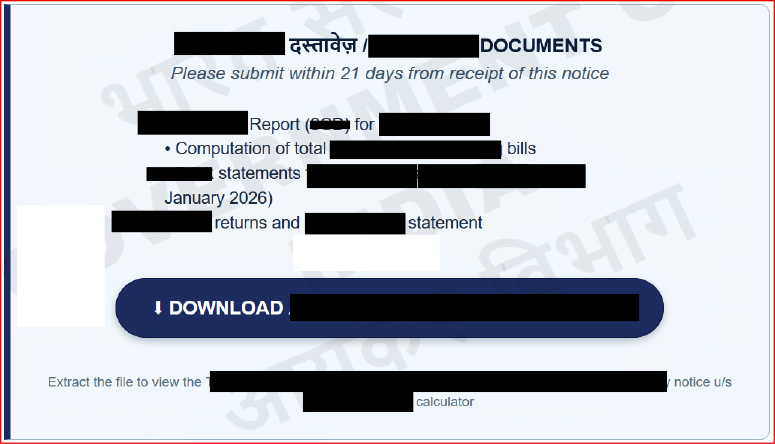
CYFIRMA said in a report shared with GBhackers, campaign utilizes a convincing fake tax assessment notification hosted on the domain harivo[.]vip, designed to impersonate legitimate government communication.
libsvcs.dll exhibits RAT-like functionality: mechanisms for persistence (startup registration, autorun adjustments, scheduled-task creation), host discovery (Windows version, security-product enumeration, HWID, idle time), user activity monitoring, dynamic payload execution, and encrypted Command-and-Control (C2) communication.
Indian Tax Notice Lures Abused
Analysts recovered a hardcoded C2 endpoint 103[.]231[.]12[.]27:4444 geolocated to Hong Kong, and an embedded 32-byte constant presumed to be a cryptographic key used for socket-based encrypted communication.
The combination of modular payload loading, encrypted sockets, and remote execution patterns aligns with behaviors reported for XWorm-like commodity RATs, though exact family attribution remains unconfirmed.
The campaign’s operational choices underscore strong social-engineering tradecraft: a government-themed lure exploits regional trust in tax authorities and the urgency of compliance to induce downloads of an archive disguised as official documentation.
The attack chain deliberately uses an image-mounted container (IMG) to present an innocuous file type while hiding executable content, increasing the chance of successful execution on user systems with lax handling of externally sourced archives.
Indicators of compromise published by CYFIRMA include MD5 hashes for the distributed artifacts Tax_Assessment_0609.zip (3adcf5fca3f4fe23a9b73951e20d43bc).
Tax_Assessment.img (ba036fbf209b2dbdfec3fd3dee9b1798), libsvcs.dll (c0796f2ee614e1711d5355ee42dcbf62), and Tax_Assessment.exe (ac08e8f463e0fa4a431b74fd5d7f01a1) and domain registration metadata showing harivo[.]vip was registered on 25 September 2025 via Gname.com and resolves to 38[.]76[.]161[.]218.
These infrastructure details, together with the C2 IP, suggest Hong Kong-hosted resources, though infrastructure location does not equal actor origin.
Organizations and users should treat unsolicited tax-related downloads with extreme caution, block or monitor traffic to harivo[.]vip and the identified IP, and inspect incoming archives for image containers and embedded executables.
Security teams should tune detections for reflection-based DLL loading patterns (Assembly.LoadFrom()/reflection invoke), ConfuserEx obfuscation signatures, unusual assembly metadata claiming Microsoft-identifiers, registry autorun changes, and encrypted outbound connections to unfamiliar IPs on high ports such as 4444.
IOCs
| S. No | Indicator | Remarks |
| 1 | 372d7d8ca222e03afa5970848cf88efa6a3bc5146d20398601285fc7eaea6735 | Block |
| 2 | f5dc1016679f54f2be22da0ff6642046f7a943410c188514b96c28d8a3b95e12 | Block |
| 3 | 4b5405d9acd00dd9225ffcec840a1752951be801d20ee1cab4ebde9ccd96916a | Monitor |
| 4 | 3fe29bf7e2c391d5405f8c6947cc42a6ec356fcf8455ce705dc23a156f5b450a | Block |
| 5 | harivo[.]vip | Monitor |
| 6 | 103.231.12[.]27 | Monitor |
Note: IP addresses and domains are intentionally defanged (e.g., [.]) to prevent accidental resolution or hyperlinking. Re-fang only within controlled threat intelligence platforms such as MISP, VirusTotal, or your SIEM.
Follow us on Google News, LinkedIn, and X to Get Instant Updates and Set GBH as a Preferred Source in Google.


-style payload.)