

Microsoft has revealed new technical insights into Kazuar, a long-running malware linked to the Russian state-backed group Secret Blizzard, highlighting its evolution into a stealthy, modular peer-to-peer (P2P) botnet designed for persistent cyber espionage.
Originally identified as a traditional backdoor, Kazuar has steadily transformed into a sophisticated ecosystem that prioritizes resilience, low visibility, and flexible control.
This shift reflects Secret Blizzard’s broader strategy of sustaining long-term intelligence-collection operations, particularly targeting the government, diplomatic, and defense sectors across Europe, Central Asia, and Ukraine.
The group, which overlaps with activity tracked as Turla and Venomous Bear, is widely associated with Russia’s Federal Security Service (FSB).
Kazuar’s design separates responsibilities across modules to reduce detection. The Kernel module acts as the central coordinator, issuing tasks, maintaining logs, and managing communication.
Microsoft said in a report shared with GBhackers, the malware now operates through a distributed architecture composed of three core modules Kernel, Bridge, and Worker each playing a distinct role in maintaining covert access to compromised systems.
It also performs anti-analysis checks, such as detecting sandbox environments or security tools, before executing malicious functions.
The Bridge module serves as the communication proxy between infected systems and command-and-control (C2) infrastructure. Meanwhile, Worker modules execute tasks like keylogging, file collection, and system monitoring.
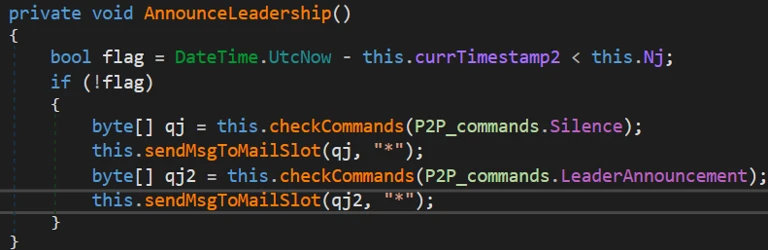
A key innovation is Kazuar’s leader election mechanism. Instead of every infected machine communicating externally, a single “leader” Kernel node is chosen to interact with the C2 server. This significantly reduces network noise and helps the botnet evade detection tools.
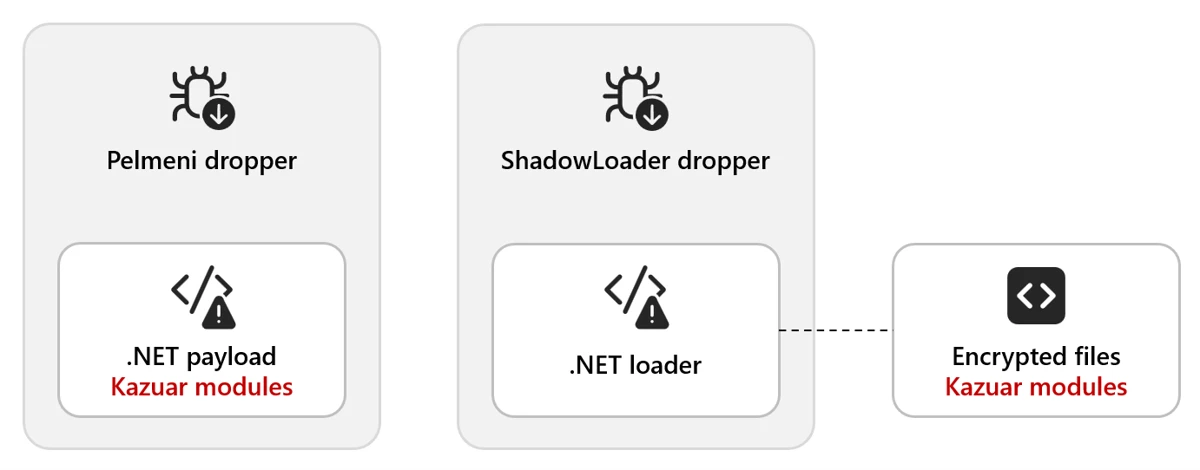
The dropper deploys a small .NET loader alongside the final payload. The dropper then invokes the loader (often configured as a COM object) and supplies the decrypted payload.
For example, in a corporate network with multiple infected endpoints, only one system may generate outbound C2 traffic, while others remain silent but still actively collect data.
Kazuar Malware’s Modular P2P Botnet
Kazuar supports multiple communication protocols, including HTTP, WebSockets, and Exchange Web Services (EWS), allowing attackers to blend malicious traffic with legitimate network activity. It also uses fallback channels to maintain connectivity if one method fails.
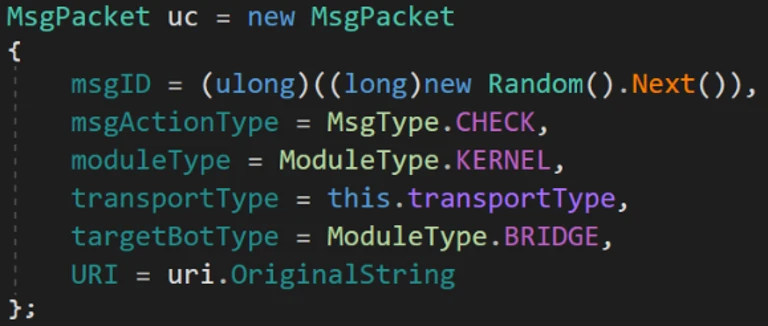
Internally, modules communicate through inter-process communication (IPC) methods such as named pipes, mailslots, and Windows messaging.
Messages are structured using Protocol Buffers, enabling efficient and encrypted data exchange between components.
The malware also relies on a dedicated working directory on infected systems to stage data. Collected information such as keystrokes, screenshots, system details, and files is encrypted and stored locally before being exfiltrated in controlled intervals. This staged approach minimizes suspicious spikes in network activity.
Kazuar is delivered using multiple dropper techniques. In one method, a dropper embeds an encrypted payload tied to the victim’s system, ensuring it only executes on the intended target.
In another, a .NET loader is deployed to execute the malware directly in memory, bypassing traditional detection.
Using Protobuf allows the malware to efficiently serialize, transmit, and parse messages through standard library functions.
Once active, Kazuar uses an extensive configuration system with over 150 parameters. These control everything from execution methods and persistence techniques to exfiltration timing and evasion tactics, including bypasses for AMSI and ETW security mechanisms.
Notably, attackers can update configurations remotely, allowing the malware to adapt dynamically during operations.
Kazuar’s modular and P2P design makes it harder for defenders to detect using traditional signature-based approaches.
Instead, Microsoft recommends focusing on behavioral indicators such as unusual IPC activity, leader election patterns, and staged data exfiltration.
To mitigate risks, organizations are advised to strengthen endpoint detection and response (EDR) capabilities, enable attack surface reduction rules, and monitor PowerShell activity.
Enabling tamper protection and network protection features in Microsoft Defender can also help block malicious behaviors.
Kazuar’s continued evolution underscores a broader trend in advanced persistent threat (APT) tooling where stealth, modularity, and adaptability are engineered directly into malware frameworks, making them more resilient against modern defenses.
Indicators of compromise
| Indicator | Type | Description |
| 69908f05b436bd97baae56296bf9b9e734486516f9bb9938c2b8752e152315d4 | SHA-256 | hpbprndiLOC.dll – Kazuar Loader |
| c1f278f88275e07cc03bd390fe1cbeedd55933110c6fd16de4187f4c4aaf42b9 | SHA-256 | Decrypted Kernel Module |
| 6eb31006ca318a21eb619d008226f08e287f753aec9042269203290462eaa00d | SHA-256 | Decrypted Bridge Module |
| 436cfce71290c2fc2f2c362541db68ced6847c66a73b55487e5e5c73b0636c85 | SHA-256 | Decrypted Worker Module |
Note: IP addresses and domains are intentionally defanged (e.g., [.]) to prevent accidental resolution or hyperlinking. Re-fang only within controlled threat intelligence platforms such as MISP, VirusTotal, or your SIEM.
Follow us on Google News, LinkedIn, and X to Get Instant Updates and Set GBH as a Preferred Source in Google.


