

A large-scale npm supply chain attack has compromised multiple widely used packages within the @antv ecosystem, to investigate what appears to be an active and rapidly evolving campaign linked to the Mini Shai-Hulud malware family.
The attack centers on the compromise of the npm maintainer account “atool,” which is associated with several popular JavaScript libraries.
Among the affected packages is echarts-for-react, a widely adopted React wrapper for Apache ECharts that records approximately 1.1 million weekly downloads.
Socket researchers quickly flagged the malicious publishing activity and classified the impacted versions as malware.
The campaign aligns with a known attack pattern dubbed “Mini Shai-Hulud,” characterized by coordinated malicious publishes across packages linked to compromised maintainer accounts.
Socket said in a report shared with GBhackers, identified hundreds of affected packages, including core @antv libraries such as @antv/g2, @antv/g6, @antv/x6, @antv/l7, and @antv/g2plot, as well as other widely used packages like timeago.js, size-sensor, and canvas-nest.js.
Because these libraries are deeply embedded in data visualization, charting, and frontend ecosystems, the potential downstream impact is significant, especially for environments that automatically install dependency updates.
On May 19 alone, Socket detected 639 malicious package versions spanning 323 unique packages within a one-hour window.
Mini Shai-Hulud Attack
Detection occurred rapidly, with most malicious versions identified within minutes of publication, indicating automated monitoring capabilities but also highlighting the speed of the attack.
Across the broader campaign, researchers have tracked more than 1,000 compromised versions across npm, PyPI, and Composer repositories, with npm accounting for the overwhelming majority of activity.
Technical analysis of the malicious packages shows a consistent payload design. The attack injects a root-level index.js file and modifies the package configuration to execute it during installation via a preinstall script.
The payload is heavily obfuscated, using runtime decoding and custom decryption routines to conceal its functionality.
Once executed, the malware targets sensitive data in developer and CI/CD environments. It scans for credentials, including GitHub tokens, npm tokens, AWS keys, Kubernetes secrets, SSH private keys, and database connection strings.
It also includes logic to identify and extract secrets from major CI/CD platforms such as GitHub Actions, GitLab CI, Jenkins, and Azure DevOps.
Stolen data is encrypted using AES-256-GCM and transmitted to a hardcoded command-and-control endpoint. To further evade detection, the malware implements a fallback exfiltration method using GitHub.
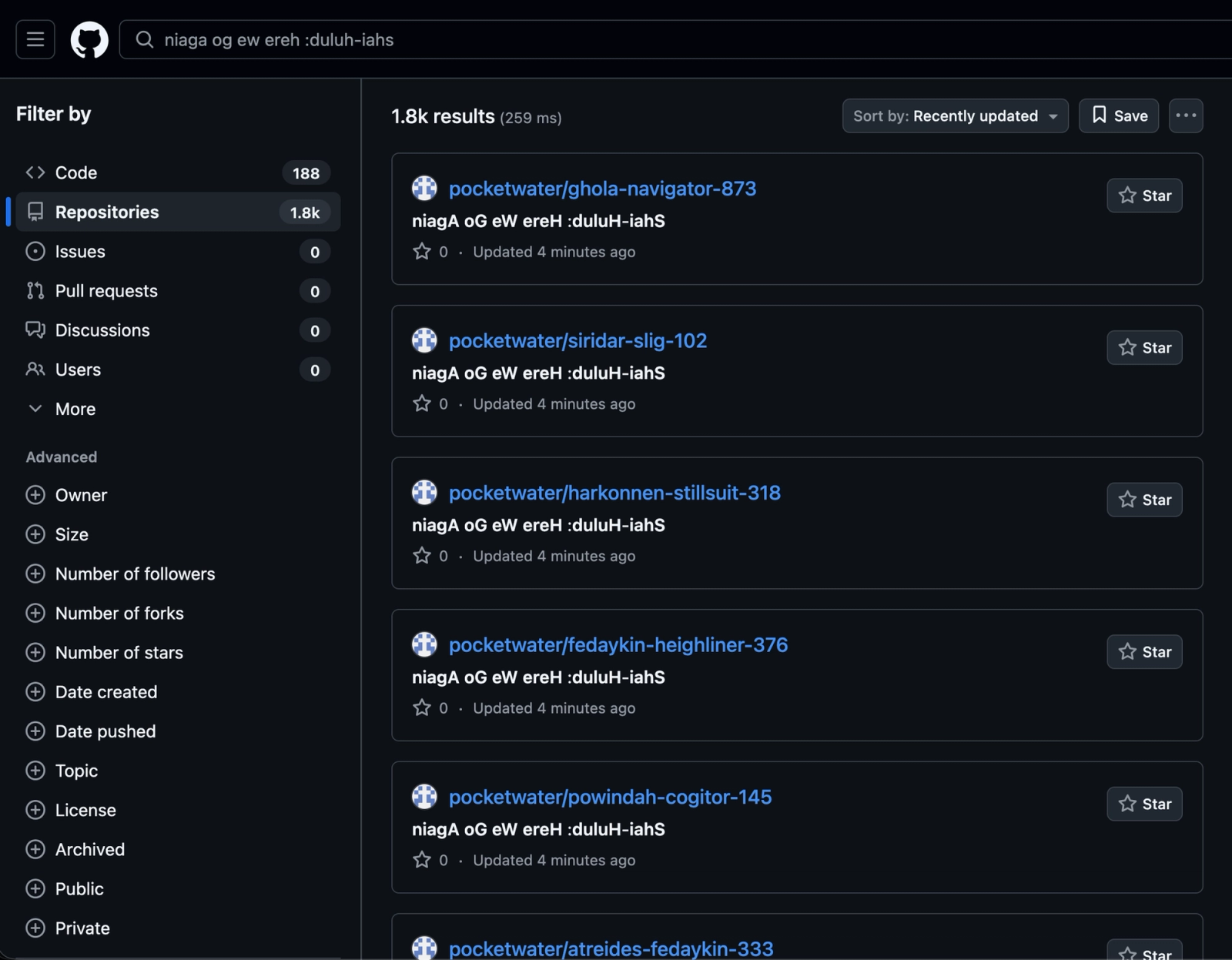
If a valid GitHub token is found, it can create repositories under the victim’s account and upload stolen data as files, blending malicious activity with legitimate developer workflows.
Researchers have already observed thousands of suspicious GitHub repositories tied to this campaign, many using a reversed “Shai-Hulud” marker and Dune-themed naming conventions.
This behavior strongly suggests that the GitHub-based exfiltration channel is actively being used at scale.
Another critical aspect of the attack is its self-propagation capability. The payload can validate stolen npm credentials, modify additional packages, inject malicious code, and republish them under the compromised maintainer’s identity.
This worm-like behavior enables the attack to spread rapidly across the npm ecosystem.
While the payload differs slightly from earlier Mini Shai-Hulud variants, its core techniques remain consistent, including lifecycle script execution, obfuscation, credential harvesting, encrypted exfiltration, and abuse of trusted platforms like GitHub.
The investigation is ongoing, and additional affected packages and indicators are expected to emerge as researchers continue to analyze the campaign.
Indicators of Compromise
Network Indicators
t[.]m-kosche[.]comhttps://t[.]m-kosche[.]com:443/api/public/otel/v1/traceshttps://fulcio[.]sigstore[.]dev/api/v2/signingCerthttps://rekor[.]sigstore[.]dev/api/v1/log/entries
GitHub Repository Markers
niagA oG eW ereH :duluH-iahSniaga og ew ereh :duluh-iahsShai-Hulud: Here We Go Againresults/results-*.json
Example Repository Naming Pattern
<dune-word>-<dune-word>-<digits>sayyadina-stillsuit-852atreides-ornithopter-112harkonnen-phibian-552fremen-fedaykin-225kanly-lasgun-874
Note: IP addresses and domains are intentionally defanged (e.g., [.]) to prevent accidental resolution or hyperlinking. Re-fang only within controlled threat intelligence platforms such as MISP, VirusTotal, or your SIEM.
Follow us on Google News, LinkedIn, and X to Get Instant Updates and Set GBH as a Preferred Source in Google.


