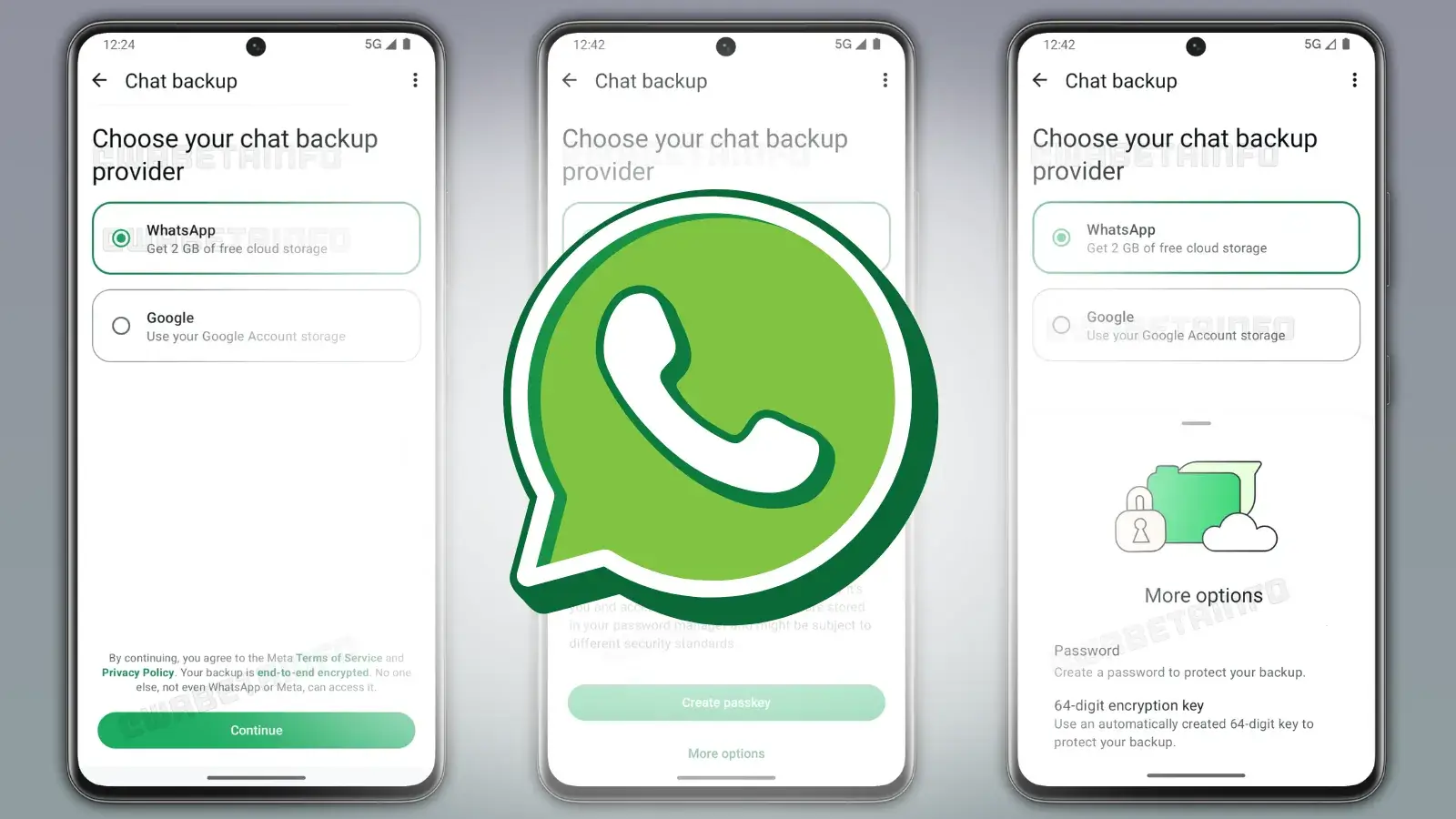

WhatsApp is actively developing an independent, first-party cloud backup service featuring mandatory end-to-end encryption.
This upcoming feature aims to reduce users’ reliance on third-party storage providers such as Google Drive and Apple’s iCloud. By bringing backup storage in-house, WhatsApp gives users greater control over their data privacy and device storage limits.
All chat histories hosted on WhatsApp’s proprietary servers will be encrypted by default. This ensures a high level of security against unauthorized access, meaning even WhatsApp cannot read the contents of the stored messages.
Passkey Integration Secures Backups
To strengthen data protection, WhatsApp is introducing passkey support for chat backup encryption.
A passkey replaces traditional passwords or complex 64-digit encryption keys with secure, device-based authentication.
Users will secure their backup vaults using the same biometric methods they use to unlock their phones, such as fingerprint scanning or facial recognition.
For example, instead of memorizing a long password to restore a backup on a new device, a user scans their face, and the local device handles the cryptographic unlocking.
The passkey is securely stored within the user’s password manager and syncs across trusted devices linked to the same account. This device-bound authentication makes backups highly resistant to phishing, credential stuffing, and brute-force attacks.
If users prefer older methods, they can still encrypt their cloud data with a standard password or a 64-digit key.
Modern chat backups include high-resolution photos, videos, and voice notes, which quickly consume available cloud storage. Android users currently share their Google Drive quota across WhatsApp, emails, and personal files.
Once the limit is reached, users must either delete essential data or purchase premium storage plans from Google or Apple to maintain their daily backups.

The upcoming proprietary backup service offers dedicated cloud space specifically for messaging data. WhatsApp currently plans to introduce the following storage features:
- A base tier providing up to 2 GB of free storage.
- Potential exclusivity of the free tier for upcoming WhatsApp Plus subscribers.
- An expanded 50 GB storage plan is projected to cost around $0.99.
- Continued support for existing third-party cloud uploads for users who prefer their current setups.
Development and Release Timeline
According to WABetaInfo, the first-party storage feature remains under active development and is not yet available to the public.
WhatsApp engineers are refining the system to ensure deep compatibility with existing security protocols and user settings.
The development team will subject the feature to multiple rigorous testing phases to guarantee stability and reliable data retrieval before a wider launch.
Once internal security audits are complete, the platform will initiate a gradual rollout to select beta testers. Pricing models, storage limits, and subscription requirements remain preliminary and could shift based on early market testing and feedback.
This strategic infrastructure shift highlights a broader industry trend toward self-contained, encrypted ecosystems that prioritize user privacy and seamless data management, rather than relying on fragmented third-party storage environments.
Follow us on Google News, LinkedIn, and X to Get Instant Updates and Set GBH as a Preferred Source in Google.


