

A significant number of servers that use the Cacti software, and are connected to the internet, have not been updated to fix a security vulnerability that is currently being actively exploited by attackers.
According to Censys, a platform for managing attack surfaces, only a small fraction of the total number of Cacti servers that are connected to the internet have been updated to a version of the software that includes a patch for the critical security vulnerability that is currently being exploited.
Out of a total of 6,427 servers, only 26 were found to have the updated version of Cacti, version 1.2.23 and 1.3.0, installed. The implication is that the majority of the servers were not running the patched version of the software, which could be a security concern.
The vulnerability being discussed, CVE-2022-46169, is a severe security issue that allows an unauthorized individual to execute arbitrary code on systems using an affected version of Cacti.
It is a combination of two types of attack, an authentication bypass, and a command injection vulnerability, which together result in a CVSS score of 9.8. This open-source, web-based monitoring solution is currently being actively exploited in the wild.
In the beginning, SonarSource identified this vulnerability, which affects all versions of the software that are 1.2.22 and earlier.
The company took the responsible step of disclosing this information to the maintainers of the project on December 2, 2022, meaning that the individuals or teams responsible for maintaining and updating the project were made aware of the issue.
This is an important step in addressing and mitigating the vulnerability, as it allows maintainers to take appropriate action, such as releasing a patch or update to fix the issue.
This vulnerability exists in most installations of Cacti due to the improper implementation of hostname-based authorization check, allowing unsanitized user input to potentially execute external commands.
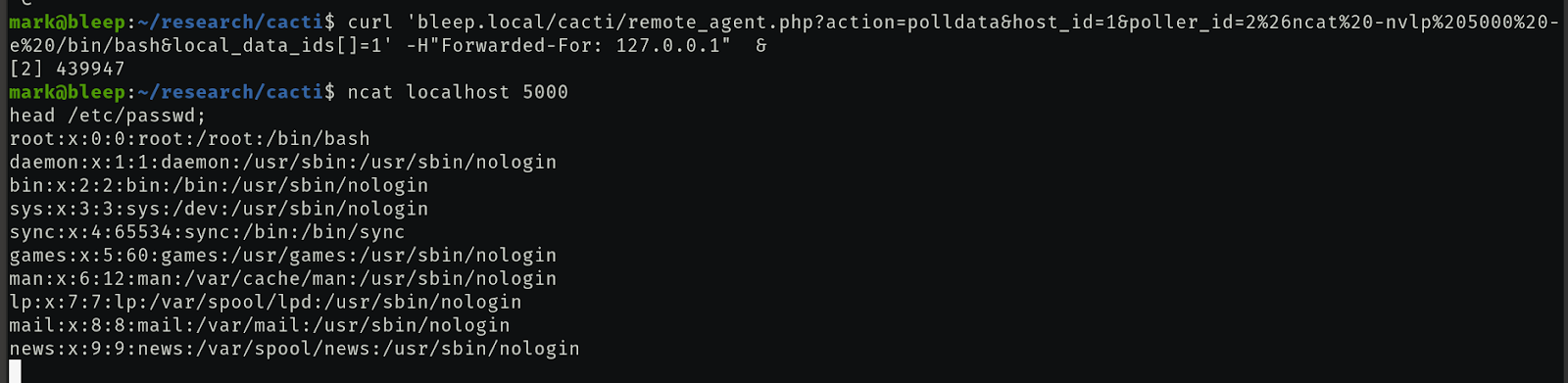
The vulnerability has been made public, which has led to attempts to exploit it, with the Shadowserver Foundation and GreyNoise reporting that malicious attacks have been observed from one IP address located in Ukraine.
This video shows how a server that has a vulnerable version of Cacti can be exploited.
Countries where a Large number of Unpatched Servers are Located
Most of the unpatched versions (1,320) are found in these locations:-
- Brazil
- Indonesia
- The U.S.
- China
- Bangladesh
- Russia
- Ukraine
- The Philippines
- Thailand
- The U.K.
The security vulnerability in Cacti allows an unauthenticated attacker to bypass the authentication process by accessing a specific file, this is done by exploiting a defect in the software that allows improper sanitization of an argument during the processing of a specific HTTP query that is related to a polling “action” defined in the database. This way attackers can gain unauthorized access to the system.
Monitors are monitored by whom?
Cacti is just one example of a type of software that is used to monitor the performance of a set of services or a network, there are many other similar tools. These monitoring tools are attractive targets for attackers since they contain valuable data.
Even if a particular monitoring software like Cacti doesn’t have a known vulnerability, it is still not recommended to leave them exposed on the internet if they don’t have to be, because they could be used to gather intelligence about an organization by attackers.
It’s a common practice for cybercriminals to take advantage of newly discovered vulnerabilities to launch attacks, hence it is crucial for users to act fast and fix the security weaknesses as soon as possible before the attackers have a chance to exploit them.
Network Security Checklist – Download Free E-Book







