

Microsoft has officially added DeepSeek R1, an advanced AI model, to its Azure AI Foundry and GitHub Model Catalog.
This move places DeepSeek R1 among a curated selection of over 1,800 AI models, spanning open-source, task-specific, and industry-focused solutions.
Businesses can now access this cutting-edge model on a trusted, scalable, and enterprise-ready platform, ensuring adherence to service-level agreements (SLAs), security protocols, and responsible AI guidelines.
Backed by Microsoft’s proven innovation and reliability, DeepSeek R1 is set to enable seamless AI integration for enterprises.
Transformative AI Development with Azure AI Foundry
The launch of DeepSeek R1 empowers developers and enterprises to accelerate AI adoption.
The model’s key strength lies in offering businesses powerful and cost-efficient access to advanced AI reasoning, minimizing the need for extensive infrastructure investments.
Azure AI Foundry simplifies experimentation and deployment by offering developers the tools to quickly evaluate and benchmark models like DeepSeek R1.
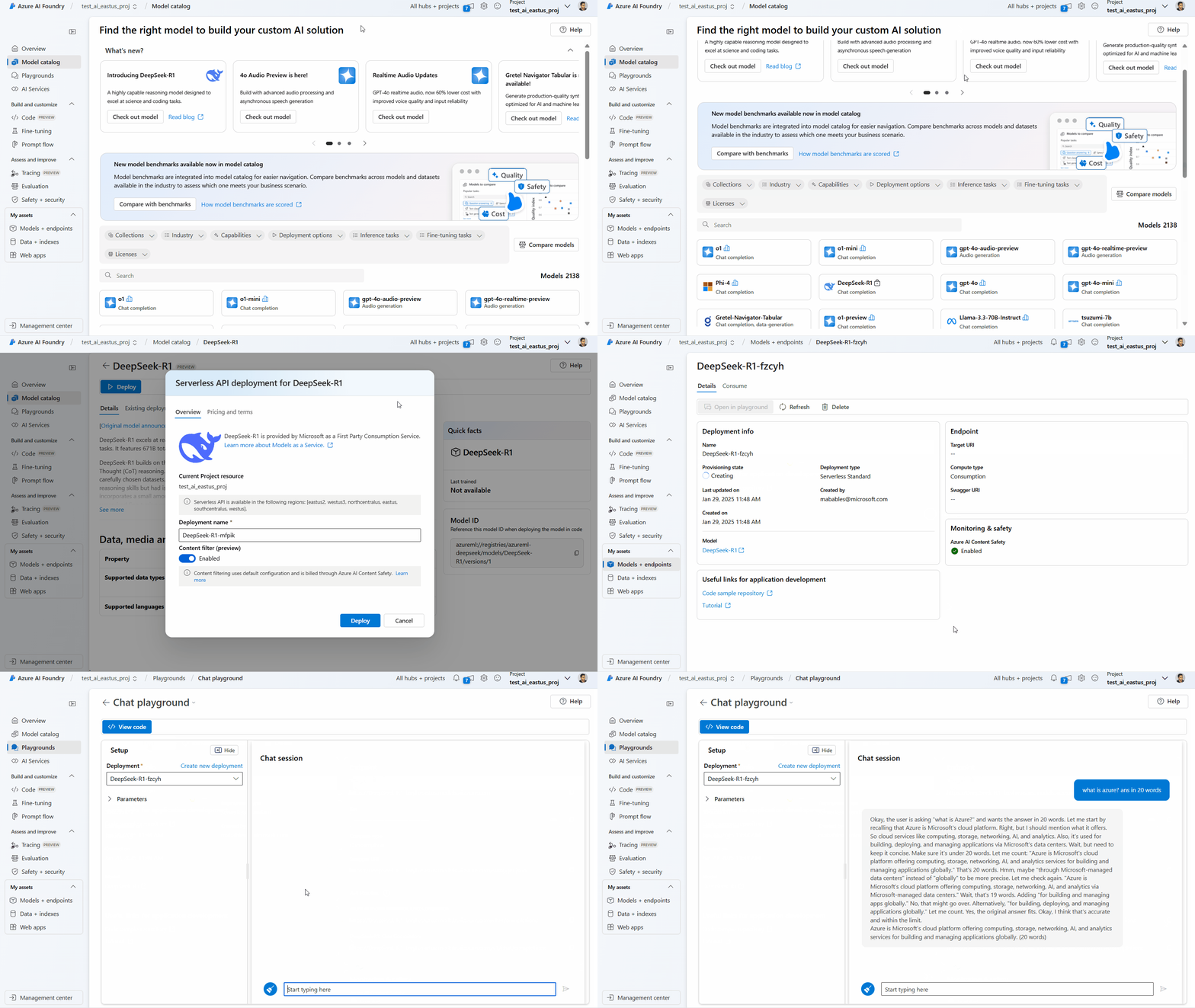
With built-in model evaluation features, users can test outputs, compare performance metrics, and scale their AI applications seamlessly.
Microsoft’s vision for Azure AI Foundry is clear: to unite the world’s leading AI models on one platform, fostering innovation and unlocking global opportunities for enterprises.
Microsoft emphasizes its commitment to enabling customers to build production-ready AI applications while maintaining the highest standards of safety and ethical responsibility.
DeepSeek R1 has undergone comprehensive security evaluations, including red teaming and automated behavior assessments, ensuring it meets stringent safety requirements.
Azure AI Foundry integrates Azure AI Content Safety by default, offering content filtering capabilities. Additionally, the Safety Evaluation System allows enterprises to test their applications for potential risks before deployment.
These safeguards make Azure AI Foundry a reliable, secure, and compliant platform, allowing businesses to adopt AI solutions confidently.
Interested users can begin with DeepSeek R1 in just a few steps:
- Sign Up for Azure AI Foundry: Create an Azure account if you don’t have one.
- Access the Model Catalog: Search for “DeepSeek R1” in the Azure AI Foundry catalog or on GitHub.
- Deploy the Model: Open the model card, deploy DeepSeek R1, and obtain the inference API and key.
- Test and Experiment: Use the deployment playground to explore prompts or integrate the API and key into your projects.
With its inclusion in Azure AI Foundry, DeepSeek R1 promises to revolutionize AI application development, allowing enterprises worldwide to innovate faster and more securely.
Collect Threat Intelligence with TI Lookup to improve your company’s security - Get 50 Free Request







