

A fresh ongoing campaign spreads the Android banking Trojan known as Anatsa. New institutions in the United States, the United Kingdom, and German-speaking countries were hit by this wave of Anatsa malware.
Threat actors intend to steal credentials by authorizing customers in mobile banking applications and then engage in Device-Takeover Fraud (DTO) to begin fraudulent transactions.
The attackers are distributing the malware through the Play Store, the official app store for Android, and it has already been installed over 30,000 times, claim researchers at ThreatFabric who have been monitoring the criminal activities.
“The focus of the ongoing campaign is banks from US, UK, and DACH, while the target list of the malware contains almost 600 financial applications from all over the world”, researchers said.
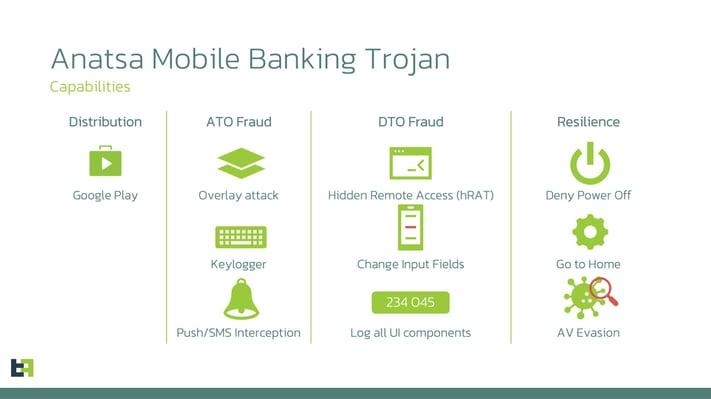
Anatsa’s activities have been observed by ThreatFabric ever since it was founded in 2020. Over the years, the actor’s areas of interest have undergone several modifications, and target lists have been updated often.
Recently, this campaign has been observed to have an obvious shift towards targeting German-speaking banking institutions in the DACH area. The areas where the distribution droppers are released reflect this focus.
Reports mention that 3 additional German banking apps were added to Anatsa’s overlay target list with the launch of the new dropper. Likewise, compared to August 2022 of last year, there were over 90 new targeted applications.
The players for Anatsa added targets from South Korea, Germany, Spain, Finland, and Singapore. Even if the droppers are not spread in all of these nations, it is clear that those areas are among the targets.
The trojan was installed over 300,000 times during a prior Anatsa campaign on Google Play in November 2021 by posing as PDF scanners, QR code scanners, Adobe Illustrator apps, and fitness tracker apps.
New Malvertising Operation
After a six-month break from spreading malware, threat actors started a new malvertising operation in March 2023, encouraging potential victims to download Anatsa dropper apps from Google Play.
The malicious apps still fall under the “office/productivity” category and disguise themselves as office suites, PDF viewers, and editing apps.

When Google received reports about the malicious app and removed it from the store, the attackers promptly reappeared by uploading a new dropper under a different pretense.
The apps in all five cases of the revealed malware droppers were initially submitted to Google Play in the clean form before being updated with malicious code, perhaps to get around Google’s rigorous code review procedure.
“Once the device is infected, Anatsa can collect sensitive information (credentials, credit card details, balance, and payment information) via overlay attacks and keylogging”, researchers said.
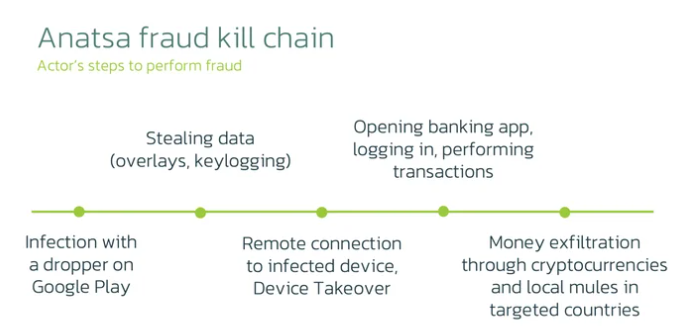
It has been observed that it is particularly difficult for banks’ anti-fraud systems to identify it as transactions are started from the same device that the targeted customers frequently use.
Finally, according to recent reports, Google Play removed the developers and deleted all of the discovered dangerous apps.
“AI-based email security measures Protect your business From Email Threats!” – .






