Sunday, October 18, 2026

Warning!! Google Chrome 0-Day Bug Exploited in Wide – Update Now!

Google released a new version of Chrome 103.0.5060.114, a stable chennal update with the fixes of security vulnerabilities, including a Zero-day bug that was exploited wide by unknown threat actors.

Chrome 103 was released with the fixed for 4 security vulnerabilities reported by external security researchers.

CVE-2022-2294, a Heap-based buffer overflow zero-day bug allows attackers to execute an arbitrary code remotely and bypass the protection mechanism, additionally, it leads to DoS: Crash, Exit, or Restart the affected system.

“A heap overflow condition is a buffer overflow, where the buffer that can be overwritten is allocated in the heap portion of memory, generally meaning that the buffer was allocated using a routine such as malloc()”. mitre explains.

Here are the other bugs that were fixed in this new security update:

  • High CVE-2022-2294: Heap buffer overflow in WebRTC.
  • High CVE-2022-2295: Type Confusion in V8. Reported by avaue and Buff3tts at S.S.L.
  • High CVE-2022-2296: Use after free in Chrome OS Shell. Reported by Khalil Zhani

The Zero-day bug affected both Windows and Android versions and the bug was reported by Jan Vojtesek from the Avast Threat Intelligence team.

The attacker behind this exploit is still unknown. Google says this zero-day vulnerability was exploited in the wild and does not yet share technical details or any info regarding these incidents.

Chrome 103.0.5060.114 Update:

Users can update the new version of chrome by checking Chrome menu > Help > About Google Chrome, where it will check auto-update and request you to relaunch the browser after the patch gets downloaded.
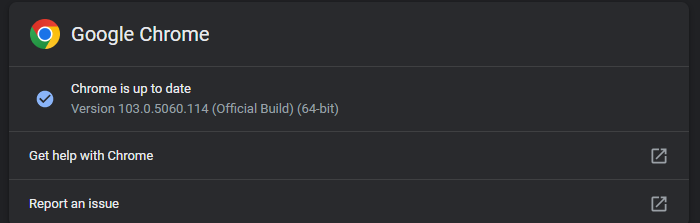
As Google Confirms that the bug is active under attack, Users are urged to update chrome immediately to apply the patch.

You can follow us on Linkedin, Twitter, Facebook for daily Cybersecurity updates.

Balaji
Balaji
BALAJI is an Ex-Security Researcher (Threat Research Labs) at Comodo Cybersecurity. Editor-in-Chief & Co-Founder - Cyber Security News & GBHackers On Security.

Hot this week

How To Access Dark Web Anonymously and know its Secretive and Mysterious Activities

What is Deep Web The deep web, invisible web, or...

How to Build and Run a Security Operations Center (SOC Guide) – 2023

Today’s Cyber security operations center (CSOC) should have everything...

Russian Hackers Bypass EDR to Deliver a Weaponized TeamViewer Component

TeamViewer's popularity and remote access capabilities make it an...

Web Server Penetration Testing Checklist – 2026

Web server pentesting is performed under three significant categories: identity,...

ATM Penetration Testing – Advanced Testing Methods to Find The Vulnerabilities

ATM Penetration testing, Hackers have found different approaches to...

Hackers Use ConnectWise SkyKick Credentials to Access Microsoft 365, Halting Cloud Backups

Attackers abused compromised ConnectWise Cloud Backup credentials to access...

Anthropic’s Claude AI Uncovers Origins of NSA-Provided Cryptographic Keys After 25 Years

Anthropic says an internal Claude research model reconstructed how...

OpenBSD Kernel Flaw Dating Back 37 Years Enables Local Privilege Escalation to Root

A newly disclosed OpenBSD kernel exploitation chain combines a...

GhostAction Hackers Hide Credential-Stealing Malware in Fake Font Files Across 94 GitHub Repositories

GhostAction attackers have expanded their GitHub credential theft campaign...

SideCopy Hackers Target Indian Organizations With ReverseRAT Malware to Steal Data

Indian authorities have warned that SideCopy hackers are targeting...

New GhostBat Android Malware Targets 60 Banking and UPI Apps to Steal PINs

A new GhostBat RAT variant targets 60 Android financial...

New ROMULUS Malware Platform Uses Six Servers to Deliver Multiple Malicious Payloads

ROMULUS, a shared ClickFix delivery platform operating across six...

Related Articles

Recent News


