

The United States Department of Homeland Security has issued a threat advisory regarding brute-forcing attacks aimed at exploiting weak passwords used on Microsoft SQL Server (MSSQL) database servers exposed to the internet.
It is clear that the intrusions analyzed by the firm stand out for their misuse of an auxiliary known as SQLPS.exe, a tool exploiting brute-force attacks as the initial compromise technique, according to a series of tweets that Microsoft has tweeted.
At the moment, no one knows what the ultimate goal of this campaign is, nor who is the threat actor behind it. “SuspSQLUsage” is the name under which Microsoft has identified this malware.
Here’s what the Microsoft Security Intelligence team stated:-
“The attackers also use sqlps.exe to create a new account that they add to the sysadmin role, enabling them to take full control of the SQL server. They then gain the ability to perform other actions, including deploying payloads like coin miners.”
It is possible to create a LOLBin extension using sqlps, a utility that comes with Microsoft SQL Server and that provides the capability of loading SQL Server cmdlets.
In the case of LOBin, an attacker would use PowerShell commands without worrying that his malicious actions would be detected by defenders.
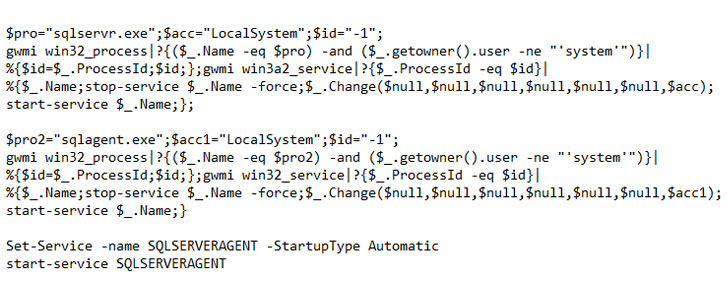
The second benefit of utilizing this method of analysis is that it ensures that no traces will be left during the investigation of the attacks. Bypass Script Block Logging using sqlps to prevent cmdlet operations from being logged to the Windows Event Log.
In March of this year, Microsoft reported similar attacks made against MSSQL servers when Gh0stCringe RATs were installed in an attempt to install them.
The threat actors used the Microsoft SQL xp_cmdshell command from the Microsoft SQL server to drop Cobalt Strike beacons in a previous campaign in February.
Recommendations
It is recommended that MSSQL administrators protect their servers against such attacks by preventing them from being exposed to the internet. And here are some recommendations that are advised by the security experts:-
- Always use a strong and complex admin password.
- Make sure to enable the event logging.
- Always use a robust antivirus tool.
- Always apply the latest security updates to decrease the attack risk.
- Enable multi-factor authentication.
You can follow us on Linkedin, Twitter, Facebook for daily Cybersecurity and hacking news updates.







 database servers.)