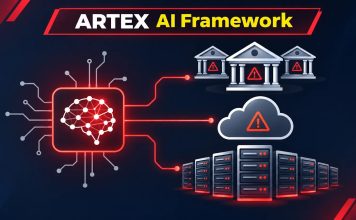
The rapid expansion of remote care solutions is converging with major shifts in cybersecurity, creating new opportunities—and significant challenges—for organisations responsible for safeguarding sensitive data, critical systems and vulnerable people.
As digital transformation accelerates, many providers now rely on uk digital strategy consultants to modernise their security practices and strengthen defences against evolving threats targeting both IT and operational technology environments.
Remote care technology plays an increasingly important role in community support, making services such as home care in edinburgh dependent on secure digital systems, cloud platforms and resilient communication tools.
These interconnected systems bring improvements in service quality and accessibility, but they also expand the attack surface across healthcare industry providers and social care organisations that historically relied on traditional security measures rather than advanced security architectures.
1. Remote Care Is Becoming Part of Critical Infrastructure
Remote care is now deeply embedded in community services and essential operations, positioning it closer to the realm of critical infrastructure protection than many realise.
As remote monitoring, mobile apps and cloud environments become core components of care delivery, the data they handle—including medical information, behavioural trends and personal schedules—represents highly sensitive data similar in value to financial or governmental records.
Attackers increasingly treat remote care technology as part of national security-adjacent systems because compromised digital systems can disrupt essential services.
Cyber threat landscape reports from infrastructure security agency bodies worldwide highlight how cyber threats are now targeting sectors previously considered low-risk, including home care, due to their reliance on digital systems and the potential for operational disruption.
Organisations must now view remote care through the same lens as critical infrastructure, adopting cybersecurity frameworks capable of safeguarding operations, maintaining regulatory compliance and protecting physical assets alongside digital systems.
2. Why Home-Based Care Requires Stronger Cyber Resilience
Remote care teams operate across complex environments involving interconnected systems, mobile devices, corporate networks and cloud platforms.
This introduces significant challenges for access control, identity management and continuous monitoring—especially when teams are dispersed and workloads rely heavily on digital sharing of schedules, reports and assessments.
Care workers, operating outside controlled facilities, face cybersecurity challenges such as initial access attacks, data manipulation attempts, ransomware as a service groups targeting scheduling or payroll systems, and sophisticated attacks exploiting human factors.
These workers often carry information that threat actors can monetise or weaponise.
Remote care providers now need:
- zero trust architecture
- strict identity management
- network segmentation across digital systems
- vulnerability scanning and proactive threat detection
- cloud computing governance
- data privacy controls for sensitive data
Zero trust is increasingly seen as a promising solution, with widespread adoption anticipated across community care organisations by 2025.
3. The Rising Threat Landscape for Remote Care Services
Threat actors now exploit weaknesses across both IT and operational technology systems. As remote care expands, cyber operations targeting service providers become more frequent and complex.
Attackers aim to overwhelm organisations that lack advanced security practices, exploiting gaps in security policies or outdated infrastructure.
Key rising threats include:
- ransomware as a service aimed at small community providers
- exploitation of vulnerable cloud environments
- attacks on internet of things devices used for monitoring
- data breaches involving client profiles and visit histories
- manipulation of operational technology controlling smart home systems
- exploitation of digital security lapses in mobile care platforms
Because remote care tools are now part of cyber physical systems, infrastructure security must evolve to address risks not only in hospitals but across home-based care networks.
4. The Role of AI, Machine Learning and Predictive Analytics
Technological advancements in artificial intelligence and machine learning are reshaping threat detection, risk management and vulnerability assessments across the cybersecurity landscape.
AI driven monitoring tools enable organisations to leverage predictive analytics for earlier identification of emerging threats or unusual activity within cloud environments, mobile applications and interconnected systems.
Remote care organisations increasingly rely on automated systems to:
- detect anomalous behaviours
- reduce human error
- analyse large datasets
- identify patterns in user activity
- monitor IoT devices in real time
- support proactive threat detection
To understand how these systems operate, see how ai detection software uses deep learning models to identify malicious behaviour, compromised accounts or suspicious network traffic.
As AI becomes central to cybersecurity strategies, human expertise remains essential to interpret results, strengthen risk management decisions and maintain resilience.
5. Cybersecurity Challenges in Interconnected Care Ecosystems
Remote care now depends on cybersecurity resilience across supply chain networks, cloud platforms, industrial internet devices and digital systems that share information across teams and partner organisations.
This interconnected web creates exposure far beyond a single provider.
Significant challenges include:
- managing access control across multiple applications
- monitoring third-party vendor security
- preventing supply chain vulnerabilities
- ensuring security practices align across distributed teams
- defending against sophisticated attacks exploiting operational technology weaknesses
- balancing regulatory compliance with rapid technological progression
These challenges require a unified approach to security architectures, integrating both IT and operational technology systems into broader critical infrastructure protection strategies.
6. Quantum Computing and Future Threats
Quantum computing introduces emerging threats that could disrupt current encryption standards and undermine digital security across remote care platforms.
Although still developing, quantum capabilities pose long-term risks involving encrypted data storage, data breaches and identity management systems.
As quantum computing advances, organisations must prepare for future vulnerabilities by adopting post-quantum encryption strategies, updating security frameworks and ensuring that both cloud platforms and operational technology systems remain resilient.
Quantum readiness will soon become a core requirement for any organisation handling sensitive data or operating close to critical infrastructure.
7. Strengthening Cyber Resilience in Remote Care Environments
To address the rising threat landscape, remote care providers must adopt business strategies focused on:
- zero trust security
- multi factor authentication
- continuous monitoring
- vulnerability scanning
- clear security policies
- staff training and human factor awareness
- improved access control
- integrated threat detection systems
- regular evaluation of digital systems
- network segmentation across corporate networks
- safeguarding operations through layered security frameworks
Digital transformation must account for both technological advancements and human factors to ensure remote care providers maintain safe, reliable operations.
Cyber resilience is not only about preventing attacks—it’s about ensuring continuity of business operations even when incidents occur.
8. The Convergence of Cybersecurity and Care Technology
The convergence of cybersecurity and remote care technologies represents a shift from traditional security measures toward digitally integrated security systems protecting remote workflows, IoT devices, cloud computing environments and mobile data sharing.
This convergence affects:
- critical infrastructure
- healthcare industry service providers
- community care organisations
- cloud environments used for scheduling, reporting and assessments
- cyber physical systems supporting independent living
- digital systems coordinating home visits
- operational technology embedded in smart homes
Security measures must protect both digital and physical assets, ensuring that technological advancements support, rather than endanger, vulnerable individuals.
Final Thought
Cybersecurity and remote care technologies are converging at a rapid pace in 2025, reshaping safety expectations for organisations, workers and clients.
As threat actors continue to exploit gaps across interconnected systems, providers must adopt stronger security frameworks, intelligent monitoring tools and resilient digital architectures that protect sensitive data and maintain service continuity