

Researchers discovered a new Android malware called “Agent Smith” that infects nearly 25 million mobile users around the globe without letting users know about the malicious activities.
Agent Smith malware activities have a similar appearance of previously reported malware campaigns such as Gooligan, HummingBad, and CopyCat.
Malware posed as a legitimate Google app and takes advantage of the known vulnerabilities to exploit the device and replacing the already installed apps with its malicious version without any form of users interaction.
The ultimate motivation of the threat actors behind Agent Smith Malware is to push the malicious advertisements and harm the device to steal the bank credentials and other forms of financial gain.
Threat actors behind this Agent smith primary targets are India though other Asian countries such as Pakistan and Bangladesh.
Since Android keeps on securing its environment by applying frequent security patches, threats actors continue to develop the sophisticated infection chains to finding the new loopholes.
“Agent Smith” seems to be the first malware that using new loopholes, such as Janus, Bundle and Man-in-the-Disk, to achieve a 3-stage infection chain and build a botnet of compromised devices.
Infection Landscape
Agent Smith is not just infecting the single app in the targeted device, but it keeps on checking all the apps which are in the targeted list and it does the same until it finds the
Researchers estimated that the malware-infected over 2.8 billion times with 25 Million unique devices and its abuses 9Apps market using 360 different dropper variants.
There are 5 most infectious droppers that listed below were found in the list and
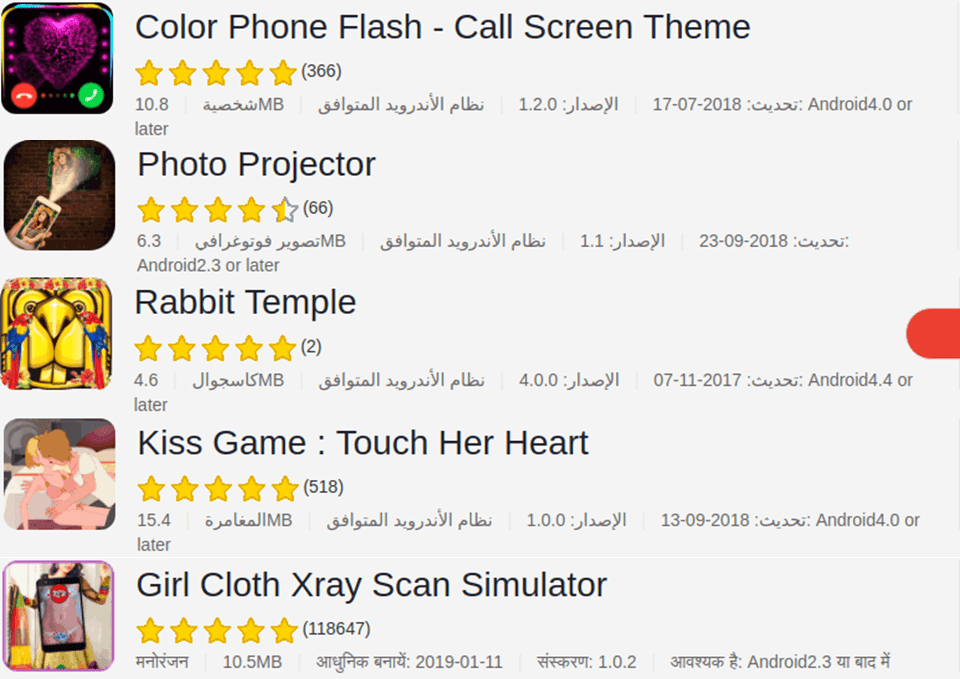
Since the Android users are much higher in India than other countries, “Agent Smith”, overall compromised device brand distribution is heavily influenced and infected many of the Indian Users.
Researchers learned that most infections occurred on devices running Android 5 and 6, also, there is a number of successful attacks against newer Android versions which all not update their Android device properly.
Agent Smith Infection Process
Earlier 2019, Agent Smith started its infection process from India using similar characteristics of Janus vulnerability and the variant has an ability to hide their app icons and claim to be Google-based apps.
Agent Smith infection app that downloaded by the victim has a weaponized Feng Shui Bundle as encrypted asset files and the app has several other functionalities including photo utility, games, or adult related.

Once the dropper gets executed, it automatically decrypts and installs its core malware APK which is responsible for app update and malicious patching.
According to Checkpoint research ” The core malware is usually disguised as Google Updater, Google Update for U or “com.google.vending”. The core malware’s icon is hidden.”
Finally, it releases the apps list and checks whether the victims have installed any of the pre-listed apps which are hard-coded or sent from the C&C server.
“If its find any apps that listed in the pre-list, it will extract the base APK of the target innocent app on the device, patch the APK with malicious ads modules, install the APK back and replace the original one as if it is an update.” Checkpoint reported.
You can follow us on Linkedin, Twitter, Facebook for daily Cybersecurity updates also you can take the Best Cybersecurity course online to keep yourself updated.







